Showing posts with label family. Show all posts

participatory democracy in schools

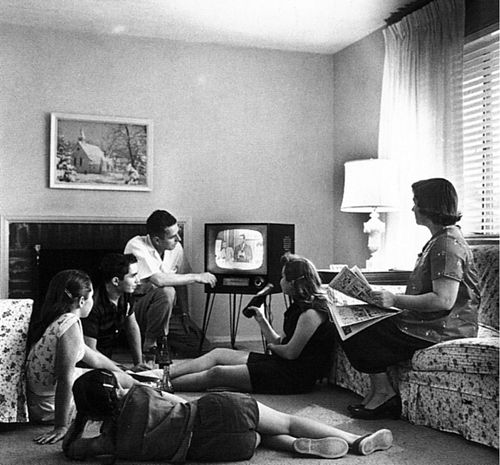
OPPORTUNITY FOR ALL CHILDREN. THAT'S WHAT DEMO...public domain image via Wikipedia* Author: Office for Emergency Management. Office of War Information. Domestic Operations Branch. Bureau of Special Services. (03/09/1943 - 09/15/1945)

AERO' 
s new site hosts Ron Millers' eloquent essay below (h/t to Lefty Parent for pointing it out to me). I have posted work from Ron Miller before, see  educational rights.  The US has struggled with democracy and civil rights but a focus on democracy and choice for children and families is a natural outgrowth of that struggle, a topic discussed in Ron Miller's talk on educational rights, at the link.  

In the US, compulsory attendance was instituted at a time when the world surrounding schools was entirely different for families, children and communities.  The schools themselves were far more limited in time of attendance and the power schooling had over the economic lives of many people. As schooling was extended and industrialization grew,  schooling was linked to jobs for more and more people and compulsory attendance ensured jobs for a growing bureaucracy within the public schools. As long as economic growth was strong and widely shared, the structural issue of lack of input and control by families was not experienced as being negative (with the significant exception of racial apartheid in the South). 

However, the past 30 years of neoliberal, corporate domination of the economy have stressed many working families to the breaking point and access to the public schools remains problematic for many African-Americans who now face a school-to-prison pipeline, deep inequities of funding, and ongoing racism. All families need and want educational resources for their children so that their children can have good lives. Ensuring that families have rights within the public schools will help transition the system from a top-down relic of central planning to a true provider of learning services that families can access and use as they need. 

"Participatory democracy is not a utopian ideal at odds with human nature, but an expression of attainable values that a society could choose to pursue. It seems that rapid industrialization and then the sudden emergence of technologies for mass communications threw the American democratic experiment off balance for a century or more. Enormous wealth and power became tantalizingly available, and fueled “dominator” cultural patterns at the expense of the partnership vision that inspired early American democracy. But since the rebellions of the 1960s, it appears that we have begun to recognize what we have lost, and millions of citizens are working to reclaim that vision."
Lefty Parent also blogged on this topic and his essay is worth reading:
Thoughts on Participatory Democracy | Lefty Parent"We progressive people should be raising our kids to question authority (starting with our own) and participate as fully as possible in our family decision-making processes. That rather than treating our young people as semi-functional beings whose lives must be thoroughly stage-managed by their parents and the educational institutions of the state (in loco parentis). We should send our kids to school urging them to stand up for their rights as human beings to a voice and a vote in the institutions that govern them. We should lobby their teachers and principals to implement elements of democratic process in school, towards giving our kids “full citizenship” in their own school."


supporting families

Schools do not have to wait until poverty is fixed to ensure that their antiquated ed model works well for everyone .... schools can be strong players in the work of ending poverty if they can change their mission from being a factory manufacturing credentials to providing families learning services that they choose and control.

Schools have been over-empowered as institutions in the US primarily because compulsory attendance has so greatly restricted the input of parents, the natural allies of the child. And so we commonly hear of schools planning programs that will help fix the family, or help train and educate families on how to be families. Why employees within a mass institution like the schools should teach families how to be good families, I have no idea. Schools feel very authoritative on this level, and routinely characterize families as the first schools.  Schools want to help the family they undercut, penalize and threaten. Indeed, as frustration with the schools has grown, many technocrats want to remake the family so we can fix the schools. This is completely backward and a sign of great institutional overreach.

Schools create great stress on families when they use the factory model for twelve long years. Schools could provide more support for families by making education itself a fully public social service, something families could access with much broader control and participation. That's real choice, not the faux choice of corporate charter or local public run as a factory: neither of these offer families any real choice at all.  Families that could choose services and customize schedules could transform their lives. Schools that supported families could transform communities.

We need it.  The family is under stress.

American Depressions | Tikkun Magazine:
"...  There is now an opportunity for the wider ethical spiritual morality of the community associated with Tikkun and left-leaning evangelicals connected to Sojourners who develop their social, economic, personal, and political morality, and who see political activity as an expression of morality taken into the world. We on the Left have an opportunity to champion our own moral, ethical, and spiritual vision to Americans who desperately need both morality and hope for a better world. Evangelical promotion of the centrality of personal connection and family gives the Left an opening to advocate material and psychological support for all kinds of families. The Left urgently needs a family program to address the mass breakdown of U.S. homes and families."

American Depressions | Tikkun Magazine:
"The living standard of Americans deteriorated psychologically as well. In American culture, women provide most of the emotional labor to make home a warm and comfortable place for men and children. It is women who usually arrange children's social lives and activities, from play dates to dental appointments. Women are usually the directors of adult social life as well. Indeed, women are usually in charge of emotional life for the entire family. The more women work outside of the home without social support in the form of child care programs and domestic help, the more stressed, overworked, and emotionally unavailable they become. Overwhelmed women have less energy for the roles of social director and organizer, as well as emotional and physical caregiver. Households are hurting emotionally. When Bush took office in 2000, he cut many of the already hobbled social programs that allowed families to survive. Families are in trouble."

The Decline and Fall of Parental Authority | | AlterNet
"Not long ago, I might have heard parents talk as if their kids’ problems—drugs, school failure, or acting out—were matters for individual families to resolve, sometimes with the aid of a therapist. Now, I’m seeing mothers and fathers challenge the entire social, educational, professional, and economic context of childrearing—a system, they increasingly believe, that’s made effective parenting almost unachievable."

Parent-child bond shown to be more crucial than income - The Irish Times - Fri, Mar 09, 2012:"“What happens between children and their parent matters whether they are in a lone parent family, in a socio-economically deprived area or not,” Minister for Children Frances Fitzgerald said. How parents interact with children can be “hugely protective” even in adverse situations.

Daily Kos: What’s so bad about American parents, anyway?:
"..the United States is one of only three countries in the world, along with Swaziland and Papua New Guinea, that have no federal paid parental leave policy. After President Richard Nixon vetoed the Comprehensive Childcare Act of 1971, which promised to ensure quality, affordable child care, American parents were left to fend for themselves. In a country that pays its child-care workers less than its janitors, that is a time-consuming, expensive and often fraught search. Child-care costs, which consumed 2 percent of the average family budget in the 1960s, now take up 17 percent, according to the U.S. Department of Agriculture, second only to a mortgage or rent."


background posts

redshirting

Redshirting (don't confuse with redlining) is holding a child back until they are the oldest instead of the youngest in a class. Parents want to ensure their kid doesn't get left back in a system that is all about ranking and sorting all along the way. Even the youngest children are now graded and tested and good jobs are not available for those with only a high school degree, though prisons proliferate, which means kids must perform to earn scholarship money for colleges that are unaffordable to the majority. But no pressure.

Gladwell's Outliers had chapters on the youngest phenomena and Canadian hockey leagues and it is interesting stuff. I thought the book revealed a lot about how an industrial approach to sorting kids into programs coupled with a culture that likes to use competition to further sort and reward/punish people, is completely unfair and a crude mechanism at best. Of course, schools do not have to function this way. We can move away from a factory model where we entrust children to professionals who process through the controlled content so they can be credentialed. We could move toward a learning services model that allows families to make choices and children to learn without the grading and ranking that cause redshirting.

But don't look for any insights into our industrial, factory-model school system or any clear-headed facts about how unsupported and stressed the American family is in the neoliberal, winner-take-all society.  No, 60 Minutes blames that perennial favorite, bad parents for this problem.

Viewed from the comfy salary level of these reporters, parents, pushing for what they see as small but meaningful advantages for their child in a society so harsh and punitive, are just trying too hard. Relax. Your kids will turn out fine.

At least it feels that way for those 1% journalists so bemused and befuddled by middle-class US families.  If you want to give your kid a leg up as a working-class parent, however, the humor is over, and the so-called crime of theft of education will keep families in line. The sorting and ranking will not be subverted and a more democratic and citizen-based approach to schooling doesn't make for a well-behaved 99%.

Schools that allowed families to choose classes and participation level would allow families ways to ensure their kids are rested, healthy and able to shape their social world as well as their learning journey. In doing that, schools could expand the social life of entire communities.

UPDATE: Just saw this on G+, h/t Mike Elgan

Influence of relative age on diagnosis and treatment of attention-deficit/hyperactivity disorder in children
"Boys who were born in December were 30% more likely ... to receive a diagnosis of ADHD than boys born in January. Girls born in December were 70% more likely ... to receive a diagnosis of ADHD than girls born in January. Similarly, boys were 41% more likely ... and girls 77% more likely ... to be given a prescription for a medication to treat ADHD if they were born in December than if they were born in January."
60 Minutes Overtime, 03.04.12 - 60 Minutes - CBS News:


UPDATE: Gladwell's answer to the problem is here (break up classes by birth date) of course, schools rarely work out solutions since they have police power over families. I'm betting lots of districts just make a rule about this even though the ADHD finding speaks volumes about the schools' ability to handle and understand child behavior.

background post
blaming parents, blaming the family
make public schools truly public
what's wrong with the schools?
every parent should have real choices
semi-private clubs called schools


SAT = family income measurement

How to predict a student’s SAT score: Look at the parents’ tax return | Daniel Pink:
"Take a look at the chart below. On the horizontal axis is family income. On the vertical axis is the combined average SAT score for students from families in each group. The general story is pretty simple: The higher the parents’ income, the higher their kids’ SAT scores."
The SAT test is a finely-honed way to ascertain which kids come from which socio-economic groups.

I've posted stuff by Daniel Pink before:

undermining the family and the child

AN ESKIMO FAMILY. Tenderness and responsibilit...
AN ESKIMO FAMILY. Tenderness and responsibility in their treatment of children is a virtue of the Eskimo which binds them closer to the brotherhood of civilized peoples than their skill at carving or with the needle. (
Photo credit: Wikipedia)

The Phenomenon of Peer Orientation : Hold On to Your Kids  Mass coerced schooling undermines the family.  It was intended to do so.  In a time where agricultural work and truly small businesses provided most jobs, the side effects of this paternalistic method were felt far less than today when the entire context surrounding schools has been altered.

Today, mass coerced schooling, now extended to 12+ years, with its emphasis on grading and ranking and ever-increasing testing, fees and tuition, is fast replicating the child labor evils it was meant to replace. And devoid of the late 19th century social structure, schooling has created an unbalanced and excessive peer-orientation that undermines the quality of life for families.

From the post:
Dr. Neufeld has dubbed this phenomenon peer orientation, which refers to the tendency of children and youth to look to their peers for direction: for a sense of right and wrong, for values, identity and codes of behaviour. But peer orientation undermines family cohesion, poisons the school atmosphere, and fosters an aggressively hostile and sexualized youth culture. It provides a powerful explanation for schoolyard bullying and youth violence; its effects are painfully evident in the context of teenage gangs and criminal activity, in tragedies such as in Littleton, Colorado; Tabor, Alberta and Victoria, B.C. It is an escalating trend that has never been adequately described or contested until Hold On to Your Kids. Once understood, it becomes self-evident - as do the solutions.
The important work of Mate and Neufeld has profound implications for understanding the role of mass coerced schooling in undermining the social lives of children and their families. Transitioning to learning centers that were voluntary and allowed families to customize their use would strengthen and improve children's social lives as well as strengthen family relationships.

Compulsory schooling began by requiring far fewer years of attendance and schools were far more anchored within their communities.  The declining number of schools/districts due to consolidation has placed kids in ever larger social settings with authoritarian and impersonal policies instead of smaller schools and districts that can be more responsive.  


NOTE: Data for one-teacher schools available only after 1927. Some years interpolated by author.
SOURCE: U.S.Department of Education
At the same time, our social capital has also declined and the communities and social life that helped children and youth has been diminished. Families have two income earners and live remote from extended family members. Community activities are lessened, from neighborhood stores to park access to walkability of neighborhoods, all have declined. Children rarely are allowed to roam very far. From Mate and Neufeld:
So what has changed? The problem, in a word, is context. Parenting is not something we can engage in with just any child, no matter how well intentioned, skilled or compassionate we may be. Parenting requires a context to be effective. A child must be receptive to our parenting for us to be successful in our nurturing, comforting, guiding and directing. Children do not automatically grant us the authority to parent them just because we are adults, or just because we love them or know what is good for them or have their best interests at heart. Those who parent other people's children are often confronted by this fact, be they step-parents, adoptive parents, foster parents, grandparents, babysitters, nannies, daycare providers or teachers. Less obviously but of great importance is the fact that even with one's own children the natural parenting authority can become lost if the context for it becomes eroded. 
The book provides strong substantiation of the critical importance of context in supporting the family and enabling parents to parent easily.  Schools that provided parents and families real choices, that were voluntary and ungraded and that offered families a wide variety of learning services would be able to support the family and child in a learning journey.  This would be a fundamental realignment of the nature of schools that could serve to strengthen families, greatly expand the services offered, and allow the natural talents and gifts of a wider range of people to flourish.  Some think that only a very few specific skills must be trained into young children in order to form a good society.  Some want to homogenize our culture and our gifts; many want to test, control or manipulate these gifts for profit. 

We need to grow and nourish the wide variety of human gifts that are present and currently ignored, disavowed, and wasted by attempts to pound human beings into molds.  A smarter and more socially-attuned approach like providing learning services might help us grow local economies and transform our social worlds. Ensuring that families can effectively parent their children is one way to build a stronger social fabric. 

background posts
blaming parents, blaming the family


Enhanced by Zemanta

Ngram: school and family

My recent post on tax breaks for homeschoolers discussed the schools and families as institutions etc.  So I generated this Ngram.  I will add that compulsory attendance laws became more widespread in the years 1900 - 1920 see below.  (Quote below from this link at stateuniversity.com.)
A National Bureau of Economic Research study found that school attendance rates in 1900 were significantly raised in those states that combined compulsory school attendance with child labor laws. By the second decade of the twentieth century, a majority of states had specific child labor laws that set the minimum age for employment at fourteen and included specification of the completion of school grades and other educational requirements.
Also, homeschooling was rising in the 1970s when back to the land movements were common.  Illich published Deschooling in 1971.  And homeschooling on a wide scale took off around 1980 after books by the Moores and John Holt came out.


blaming parents, blaming the family

While so-called polarization and ideological divides (mass disinformation campaigns and the lack of grassroots citizen input at all levels) create a lot of noise in what passes for discourse in modern American media, everyone can agree on one thing: parents and the family are to blame for whatever ails our children.  Parents who just don't do a good job, families that are not two-parent, parents who won't turn off the TV, or parents who don't care:  there is a boatload of blame directed at the family.  Even among homeschoolers, the family blame game is popular.

But the fact is this:  families have been disenfranchised by the compulsory attendance in literacy factories for over a century now.  Families are greatly weakened by design in a system where compulsory attendance laws override the family.  Wage decline, the complete lack of family support services even sick leave, dysfunctional healthcare that often bankrupts families, childcare that costs ore than college tuition: all have a large negative impact on the family.  But when it comes to education, the family really can't be blamed for much since the entire system is designed to weaken the family.  Why is everyone complaining?

via Wikimedia
A Penny History
It didn't seem that way, of course, at first.  New schools themselves were a community resource, attendance was fairly short in length of time, and in the flow of growth that industrialization brought to the wealthy and still resource-rich US, this transition was still one that brought good things to many people's lives.  Deep structural issues, like the fact that families now had no input into their children's educational choices or studies and the hierarchical sorting and ranking to cull out the top, a Prussian method, were not fully felt when the bulk of jobs were unrelated to schooling. Maybe you were not the favorite in the one-room schoolhouse but until the 1920s, most jobs were in local businesses and communities and unrelated to school. After the depression, there were many, many new jobs being created by the industrial economy and the high scgool degree was a credential of real value.

Whatever families felt as compulsory attendance was lengthened, and lengthened (schools became addicted to legal power over families, it made a lot of things much simpler), it was also a free resource and there was great investment in it.  Schools were a workable way to go forward for vast numbers.  In the apartheid of the South this was not the case, and many Afruian-Americans would migrate to other areas. But the West was growing and the many new jobs within the school system itself were a boon in many parts of the country. Strong communities and jobs unrelated to schooling as well as vitamins in the food all helped compensate for dysfunctional methods that we still use.

The 1920s saw, for the first time, a majority of families no longer living on the farm, the social safety net of its day.  The car would keep the family moving, first into cities and then out again to suburbs.  Extended families became the nuclear families of post WWII which have become the single-parent families of today.

My point is this: the context, the nature of communities surrounding schools has completely changed. Families, jobs, neighborhoods, food and more, it has all changed. Schools fit into a specific context and schools must change to provide the support they once did in a different time.

The US does not have the strong social safety net of most industrialized countries to support children and families.  The past 40 years of wage decline have taken a steep toll on families as women began working to overcome economic shortfalls and children and communities suffered.    Family leave policies within the US are notoriously non-existent; career tracks are all-consuming. The corporation was born and is now wrecking havoc.  The family is completely powerless and has taken the hardest hit from these changes to our social structure.  But the blame game continues: families need to try harder so these mass institutions will work. Small institutions like the family and the family business and real small business are now so small, they are ignored. But as organic agriculture knows that care of the soil is a base, so care for the smallest social units is foundational to community, state and national health.

Compulsory attendance is an example of a design flaw, a mechanism that ignores the social reality of families and works against that instead of strengthening that and working with it.  In the 20th century, the brand new nation-state has been struggling to maintain itself against extreme inequality and broken political, economic and social systems.  There have been many failures and effective administration of the nation-state is critical to stability.  Extreme inequality is a warning sign that recent experience should flag immediately.  Developing social, political and economic institutions that are sustainable is a global imperative.

Learning is a natural human activity, literacy is not more important than democracy and sustainable relationships, it is simply a skill among many.  We can value the provision of learning services for families and children.  The building of school spaces and establishing of learning services is a good thing.  But the administration of these services should be democratic.  There is reason to believe that changing our compulsory model of schooling would open up new ways of strengthening our communities and the social relationships within them.    Homeschooling is a spontaneous grassroots movement by citizens to reclaim family life and learning from mass institutions.

It isn't the family that is to blame for school problems.  It is the schools that have damaged our families by not allowing families to be involved in any meaningful way, by dropping alternative paths instead of expanding them, by demanding homework and fess that eat into working-class time and money, by policies all designed to assume that families are static and parents are best ignored. Supporting a healthy educational and social life for families in a society of uneven wealth means schools need to be flexible and value far more than academic achievement.