Showing posts with label parents. Show all posts

these are our children

Schools Matter: These are Our Children, Not Corporate Products:
"On December 14, 2011 Parents, community members, and educators took over the monthly Chicago Board of Education meeting. After years of not being heard, they stood up and took it back."


Breaking: Occupy CPS. Board members run for cover. (preaprez.wordpress.com)
In a chaotic scene at Chicago Public Schools’ headquarters Wednesday, the school board abruptly ended its meeting and went into closed session after being shouted down by a couple dozen angry parents and union representatives upset over planned school closures, consolidations and turnarounds.
Families need schools to listen to them. Families need power in a structure designed to ignore the family. That might have been a plan when schools were a few months of skill training within a larger agricultural process. Now that schooling is 12+ years long in an industrial economy, excluding families from a structural role makes the entire system ineffective at its core. Families can be strengthened by taking on more choices and schools can change their authoritarian culture by beginning to work more actively with their communities and the families that pay their salaries.

Families are waking up.

chronic is four

Wichita schools redefine, fight ‘chronic absenteeism’ | Wichita Eagle:
"Parents, a quick quiz:

How many school days would your child have to miss during a nine-week grading period to be considered “chronically absent”?

Ten? Twelve? Fifteen?

Try four.

Armed with a growing collection of data that shows test scores drop as absences rise, Wichita schools have redefined “chronic absenteeism” and are launching new strategies to make sure kids get to school and stay through the final bell.

“Every day’s lesson builds upon the previous day. So when you miss a half-day or even an hour, you’re missing a huge chunk of information,” said Lisa Lutz, executive director of innovation and evaluation for the Wichita school district."
and this too:
"Unlike truancy, which relates to unexcused absences, chronic absenteeism includes parent-excused absences such as those for dental appointments, family commitments and vacations. It does not include in-school suspensions or missed class time for school-sponsored activities."
The family can't win: prosecuted if they allow an unhappy child to have time off, schools create large family tensions and stress. Schools police the parents so the parents will police the child. And neither the child nor the parent have a voice in much of anything. Parental involvement is legislated out of existence. And it is always the parents who are the bad guys: parents cause almost every social ill we can name. Parents are the reason our economic system, schools systems, and prison systems don't work better. It's parents who don't provide good material for these institutions to process.

From the activist teachers at Cooperative Catalyst:

The Real Reason Kids Are Missing From School (coopcatalyst.wordpress.com)


If it were my survey in my community, I would add the following options:
  • Quit treating student absences as a criminal act and assuming that the state knows better than the parents how to raise a child. Quit criminalizing the victims of social injustice and help parents instead.
  • Provide better jobs for parents (many of our students move frequently because they live transient lives)
  • Provide a pathway to legal citizenship for immigrant families (families are fleeing to and from states out of fear of deportation, despite working hard and providing for their families)
  • Daycare for parents with young children or a living wage so that families can live off of one income (many of our students miss school to watch younger siblings)
  • Universal healthcare (many of our students miss school because they are not getting the preventative care that they need.)
I blog about how the family is systematically excluded from any role at all in so-called public schools because of compulsory attendance laws that have been stretched past any possible use. These laws have helped preserve the factory approach of schooling and have worked to exclude the people who would bring the greatest counterweight to bear on an institution that has no structural limits on what it can impose on a child or what can be devised. The so-called educated manufacture ignorance and dumb-down books into curricula to remain employed.

We can learn to structure schools as social services for families instead of against them. We can make institutions that support families and children and in doing so, make them truly social and sustainable. We can move past the factory model and toward a cooperative model. We can have every single parent deeply involved if we really want to, make no mistake about it. And while fixing everything else sounds good, individual families can make significant adjustments if they are allowed control from health issues to bullying to academics, all can be improved, one by one, if families have control.

blaming families, juvenile justice edition
bullying families and children
every parent should have real choices
undermining the family and the child
blaming parents, blaming the family


parental power, not

New ‘School Trigger’ Laws Take Parent Engagement to a New Level - NYTimes.com:
"And sometimes the parents don’t even know that the “choice” they are making is a bad one. When researchers from the Center on Reinventing Public Education at the University of Washington studied the school choice process in Hartford, they found that schools with the highest levels of parental satisfaction were often ones with the lowest levels of academic achievement. “You see this all over the country,” said Sarah Yatsko, a research analyst at the center.
Empowering parents may prove to be a crucial turning point in education reform in our generation. But if we are going to give parents broader decision-making power, they need to become more sophisticated about schooling.

We need to supply public-school parents with substantive training programs to help them figure out, for instance, what a good reading program looks like, what should be expected from a parent-teacher conference and how to ensure that elementary, middle and high school curriculums are preparing students for college.

At the very least, parents need unbiased, accessible information about what solid research tells us works best in schools — even if they don’t have a computer at home or if English isn’t their first language. Otherwise, the next big thing in education — parent power — is going to hurt our children, instead of helping them."
Professional educators are rather clueless.

Parents have another assessment tactic they often use: the health and happiness of their child. It may not be an award-winning reading comprehension program but there it is. This is actually supremely important information. A happy child and the converse, an unhappy child, are qualitative data that is lost unless we have parents empowered and making choices.

The reverse of what the speaker says is true: parents can be a check on abstract educational schemes, endless testing and drills, career paths that are not a fit. Parental power isn't about training parents to be mini-educational curriculum monitors. It is about precisely the opposite: parents that are able to have real and substantial input into what makes sense for their child and their family.

Are poor kids failing our schools? — Joanne Jacobs
"In fact, if I could fix either all of the parents (broadly defined, meaning ending childhood poverty, making sure every child had plenty of books and both parents in the home, etc.) or all of the schools in America, I’d choose the former in a heartbeat. But I’m not sure it’s possible to fix the parents — and I know it’s possible to fix the schools."

Oh, "fixing the parents" means ending poverty.  The translation really helps ensure we understand that it isn't corporations like KIPP or the war industry that are hurting kids and families. It's basically .... parents, not corporations, banks, political parties or all the suits in Washington, that create poverty.

Good to know.

blaming families: juvenile justice edition

blaming families: juvenile justice edition

The Real News Network has an excellent series of videos (I posted about these previously.) The series looks at the use of detention and jailing of juvenile offenders, a system we have used to quarantine young people from working class families decimated by structural racism, a broken safety net, and low wages.

More at The Real News

Juvenile justice expert, Bart Lubow on families: [transcription is mine]
..... those who work in the juvenile justice system ... tend to think: the families are the problems. They pathologize the family and they think that removing the child from the family context ... is a good thing because the family is the problem. 
If you are in a juvenile justice system, committed to helping kids become productive adults and you think that family is the primary problem, affecting this kid's socialization, then why is it that you've built a juvenile justice system that only focuses on 15 - 16 year olds as opposed to working with moms and dads to say "what can we do to help you fulfill your responsibility as the primary socialization force in your kid's life?"
Lubow is keenly aware of the blame game that always blames families for modern dysfunctional institutions. When the democratic structure of corporations and state institutions is weak, these large groups exploit the people they should serve in the name of jobs at the top. And then they blame the people they ignore. It's a well-known psychological mechanism.

Blaming Families
Families, the oldest social unit, are remarkably powerful even in this age of transnational corporations. The bad parent meme helps us understand almost every problem out there and it is useful to see how much damage the family has wrought in past 30-40 years:
  • Families having children has caused global warming
  • Families wanting bigger houses caused the housing bubble
  • Families using credit caused the financial crisis
  • Families eating fast food created the obesity crisis
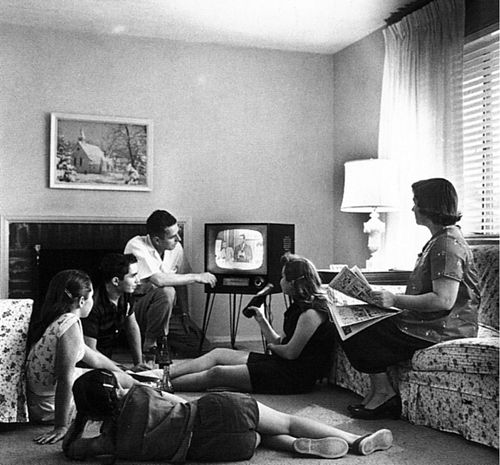
  • Families watching TV create low test scores in schools
  • Families coddling their kids cause juvenile crime
  • Families are overusing healthcare causing costs to rise
  • Families are spreading infectious disease by not vaccinating
  • Families are not educating their kids about sex
  • Families are not not forcing their kids to go to school
  • Families do not read enough books to their kids
  • Families are not spending enough time together
  • Families are getting too many divorces
  • Families are not buying and cooking good food
  • Families want time off and sick leave which businesses just can't afford
  • Families need to try harder and schools and testing corporations can help them improve 
Oh, and this just in: and families caused Occupy Wall Street too, unbelievably on a so-called parenting blog:

How bad parenting created Occupy Wall Street - Parenting.com
"We know the unemployment rate (over 9 percent) and the number of us living in poverty (more than 46 million. That’s roughly one in seven). But Occupy Wall Street is not helping those people. Occupy Wall Street is a temper tantrum in a private park. And it’s parents, moms and dads, i.e. us, who are to blame."
In fact, many people believe that family breakdown causes these problems instead of these problems causing family breakdown. Everything would be fine if families would do a better job. We could fit into the corporate and institutional structures of the new nation-state if we didn't have these families dragging us down.  Our factory schools have cooperated with mass medication, mass testing, punitive grading, and unnecessary remediation, all in the name of keeping the system intact. Many families seem to agree:

Survey: Parents deserve heavy blame for education woes | Local & Regional | Seattle News, Weather, Sports, Breaking News | KOMO News
    "An Associated Press-Stanford University Poll on education found that 68 percent of adults believe parents deserve heavy blame for what's wrong with the U.S. education system - more than teachers, school administrators, the government or teachers unions." 
US Families Lack Support 
The US has less support for families than other industrialized countries. Families do not have healthcare (and the healthcare we have is often poor quality), family leave, high-quality maternity care and real programs that enable mothers to stay with their children longer, affordable daycare, national jobs programs, food programs, or other supports for families. The US is alone among industrialized countries in many of these extremely unsupportive policies.  After years of corporate boosterism, many Americans believe that family breakdown causes these problems whereas, in truth, the relentless decimation of supportive services and wage stress has caused many families to splinter or be less functional. And that tearing of the social fabric costs because human beings are social creatures.

Families are there to supply kids to the public schools system who are in loco parentis. Families are not allowed to request and get services, from daycare to extra classes, nor can families decide to use fewer services for whatever reason: a child on medication may do better with a half-day schedule and time spent offsite while a child from a family working two jobs needs high-quality afterschool classes.

Schools Ignore Families
These differences cannot be addressed within our system since the system requires, at force of law, that children be processed in lockstep, assembly-line fashion. And ending a factory approach means ending credential manufacture as a mission. The schools need to offer learning services that support many paths to credentials. We need to stop trying to control and measure what kids know and start supporting people.  If our goal is to maximize learning, then we must support families and their children, we can move toward schools allowing families to choose their services in order to optimize their family life.

Families are social relationships that have economic value for communities.  It is really expensive to try and repair and support families that are stressed or broken. Providing ways for us to support and strengthen the people in our communities is moving toward sustainable economics by saving money and expanding service. Money cannot buy what flexibility and decentralization could provide: only the right design can get there.

At the bottom of the entire school system are families that have no power. Changing the schools is actually one of the surest ways we can positively impact the widest number of families and children. We can move away from a factory approach and begin to work toward providing families resources. Otherwise we will continue to transfer wealth upward to the 1% who are, perhaps, the families who should be blamed.

parental control. really?

Trigger Laws: Does Signing a Petition Give Parents a Voice?:
And there is no indication that these laws increase parental voice in their children’s education. “You get one shot and that’s it, because once that charter is formed, that charter dictates how it will operate,” John Rogers, associate professor of urban schooling at UCLA, told NBC’s Education Nation. “[Parents] have fewer rights in the context of a charter than they would at a public school.”
Parents have almost no voice at a regular school. Families cannot choose their classes nor can they choose their hours. Districts do not gather any data at all on what families want and need. Families are disenfranchised by compulsory attendance laws and although schools could have developed to support their users, they have not. Massive centralization and remote standards and testing corporations have used compulsory attendance laws to completely ignore and override parental input and control. And that means kids have no one representing them and families are treated poorly.

Increasingly, the schools are public/private hybrids where districts are allowed to further fund their own schools and viciously prosecute families that they feel use their private, er, public schools (as in so-called theft of education crimes).

Charter schools are a faux choice and even more corporatization and fragmentation. There are people working for change in the charter sector but the core issue remains that families have no real choices. Students and families should be able to choose almost everything they do with a school and schools would have a natural check on endless curricular development if families were empowered and able to make choices.

School choice?  It is a lie: real choice is not a reality in any meaningful way for families. Real and wide choices at every school is a key structural change that would help communities as well as kids as families. Allowing families to choose what service they need would be a fundamental restructuring of schools and could be available for every family.

As a homeschooling parent, I can say to other parents in school systems across the country: choice is indeed the way to go but parents need the choices at every single school. 

Parents everywhere need to ask for far more choices. In fact, parental choices should drive the system. 

bullying families and children

Bullyinglicensed image via Wikipedia  


Statewide school bullying laws and policies in the United States, especially as they pertain to sexual orientation and gender identity (check link to see if changes made) 
  • DARK PURPLE: Law that prohibits discrimination against students based on sexual orientation and gender identity
  • DARK BLUE: Law that prohibits discrimination against students based on sexual orientation only
  • GREEN: Law that prohibits bullying of students based on sexual orientation and gender identity
  • LIGHT PURPLE: School regulation or ethical code for teachers that address discrimination and/or bullying of students based on sexual orientation and gender identity
  • TURQUOISE: School regulation or ethical code for teachers that address discrimination and/or bullying of students based on sexual orientation only
  • RED: Law that forbids school-based instruction of LGBT issues in a positive manner
  • PINK: Law that forbids local school districts from having anti-bullying policies that enumerate protected classes of students
  • DARK GRAY: Law that prohibits bullying in school but lists no categories of protection
  • LIGHT GRAY: No statewide law that specifically prohibits bullying in schools 

"About a quarter of high school students were bullied at least once during the 2008-2009 school year, and about 7 percent were bullied online by other students, according to new data released Monday by the National Center for Education Statistics.
Alarmingly, 4.1 percent of students ages 12-18 who were bullied—approximately 289,000 students—reported bringing a gun, knife, or other weapon to school; 7.4 percent of students who were cyber bullied reported bringing a weapon to school."
For years homeschoolers have been accused of having poorly-socialized childrenOur emerging conversation about bullying is only the beginning of a bigger conversation about how poorly designed our mass schools are for human beings as social animals. 

Mass schools run in sorted and graded hierarchies run against everything the 20th century learned about human nature, evolution, psychology, neurology, and more.  Mass schooling was about ease and centralization for administration because administration has no structural limit, no check and balance.  Most businesses have to please customers (corporations that capture regulatory functions of the state are exempt from checks and balances also) but schools have a captive audience.

The parents are the natural source of push back against an administrative structure that wants to extend itself without limit but parents are completely disempowered by compulsory attendance laws. Parents have absolutely zero to say about what, how or when their kids "learn" even though parents know the kids the best. This is the schools way of removing the people who would limit their power.

The overgrown school district grew over many years, the extension of compulsory schooling also grew longer over many years, and the decay of wages, communities, and support for families and kids has grown in the past 30+ years as centralization and concentration of wealth and power continue to flow to the top. Real change is about understanding what the problem is and the core problem with our mass coerced schooling model is compulsory attendance and how that has prevented families from working with schools to get what they need.

A New Model
I have written before how moving toward a voluntary model is hard but understanding the function and consequences of compulsory attendance is critical to moving in the right direction. States that want to save money but ensure a high-quality education is available will have to start learning these facts in order to make policy that actually works and to build a sustainable model of providing learning services for families and communities.

Changing our model, ensuring that we have a substantial connection between the lowest level and the top, means anchoring administration to what families and kids need rather than allowing the top to design and administer programs downward. Changing our model will also change our lives and communities as we begin to use our social natures in a positive way.

When you stop pouring chemicals and fertilizers on crops and begin building the soil, you can start to grow food that is qualitatively different and healthier. Poisonous pedagogy and mass institutionalization allied with weakened families and communities mean that outbreaks of bullying, like insect infestations, will be frequent and hard to control. Strengthening our social soil: dropping grading and hierarchy-based sorting, as well as lessening stress by moving toward families customizing schedules will be the way real social health begins.

background 
voluntary attendance
make public schools truly public
what's wrong with the schools?
understanding school funding

related 

deschooling, family-style

Out of Poverty, Family-Style - NYTimes.com: An article in the NYT about a new anti-poverty program that breaks with a whole lot of conventional so-called wisdom and attitudes.  This program offers a lens through which to discuss moving from schooling as a compulsory, one-size-fits-all model to a voluntary, student and family based social service.  So many people will admit that education could be voluntary and full of choices for some families, sure homeschoolers can do it, but these services could not possibly work that way for the poor and families without an education background.  And that attitude consistently underestimates poorer families.

Lim Miller, the founder of the anti-poverty program, takes a similar approach:
Lim Miller had come to believe that the American social welfare system focused too much on poor people’s needs and deficits, while overlooking — and even inhibiting — their strengths. A safety net is crucial when people are in crisis, he said. But most poor families are not in free fall. They don’t need nets to catch them so much as they need springboards to jump higher. In a conversation with Oakland’s mayor Jerry Brown (now California’s governor), Brown challenged Lim Miller to try something different and gave him broad scope to be creative.
Miller creates small groups, provides support and then gets out of the way, a critical part of his strategy.  Education, too, could be done as social service where families were supported and schools focused on meeting those families needs and then allowing the families to make the decisions, something professional educators would have a hard time doing.  Lim Miller met that same inability to stop helping in his program:
"Most important, families had to agree to meet as a group at least once a month in a confidential setting to discuss their goals and any issues they deemed important. FII didn’t guide the agenda and its liaisons did not act as facilitators. They established the structure and backed off, creating a vacuum for families to take the lead. Lim Miller gave his staff strict instructions that they could not offer any advice — not even friendly suggestions. For some, this proved too difficult; he had to fire people who couldn’t help but be helpful. Lim Miller was convinced that the assumption of incapacity behind the helpfulness was a big part of the problem."
This is one reason the DIY aspect of homeschooling is so successful:  it forces families to think for themselves and work from their strengths.  Empowering all parents to choose and shape their children's education would also mean an whole new attitude on the part of families as they start making choices for the first time:
“When you come into a community that is vulnerable with professionals with power and preset ideas, it is overpowering to families and it can hold them back,” he said. “Nobody wants to hear that because we’re all the good guys. But the focus on need undermines our ability to see their strengths — and their ability to see their own strengths.”
The article discusses how anti-poverty programs do not wind up getting the money to the poor: they enable a class of professionals who then are supposed to help.  It is quite the same situation in education where classes of professionals make good jobs out of helping and everyone is waiting for superman:
Lim Miller is clear that FII is not trying to lend comfort to people who want to dismantle the social service system. He wants to fix it: to make it more about incentives. Today, 85 percent of the $400 billion that the government spends to encourage things like home ownership, college attendance, investment and small business ends up in the pockets of the top 20 percent of earners (and half goes to the top 5 percent). Very little ends up helping the working poor. On the other hand, many social benefits cut off when a family’s income rises roughly 30 percent above the poverty line — which is still a far cry from being out of poverty.
I have blogged a lot about how education is a system that culls some by throwing the rest away. The entire ranking and hierarchical approach means by definition that many will not suceed.  Real educational change means changing that fundamental structure.  Miller summarizes the lessons learned from his approach and it is exactly what schools need to be doing:
Lim Miller offers three suggestions as a starter: 1) Where possible, replace case managers with peer families who have succeeded; 2) Make it easier for small scale entrepreneurs to start businesses and raise capital; 3) Solicit regular feedback from the clients. “These families have opinions about what works and what doesn’t work,” he explains. “Our system would work better if it responded to their feedback. And it would be very empowering to them if they knew their voices were heard.” 
John Holt wrote this in "Deschooling and the Poor," an essay in Freedom and Beyond:
I don't think the schools are or can be made into a kind of springboard or ladder to help poor kids rise in the world. Instead, I think that schools and schooling are, by their very nature, purposes, structure, and ways of working, and are meant to be, an obstacle to poor kids, designed and built not to move them up in the world but to keep them at the bottom of it and to make them think it is their own fault.
Getting schools out of the way of poor families mean fundamentally changing schools from compulsory providers of an educational programme to a social service that is run by and for families.  A voluntary service where families can choose what they need and full power to turn down what they don't.

The article in the NYT provides a great look at a program making the same assumptions and breaking all the rules.  That can be done in education by moving toward a citizen-powered model and away from a top-down, professionals-know-best approach.  We are the people we've been waiting for.  We are all supermen and superwomen.

background posts


parents opting out

Mother hopes others will opt out of standardized testing - CNN  A story about a parent getting involved and making choices for her kids even when they differ from what the schools advise.
Michele Gray's sons -- Ted Rosenblum, 11, and John Michael Rosenblum, 9 -- did independent study the week of March 14 while their classmates were filling in hundreds of bubbles in classrooms with doors marked, "Quiet. Testing in Progress."

video from CNN

From a post called  Parents Taking Action in PA -- What CNN left out
Ted had already started doing research and pointed me toward a Huffington post by Dr. Slekar on his struggles with the testing. I contacted Tim, and he invited me to a showing of the Race To Nowhere. It was there that Dr. Vescio and I connected. We were both deeply affected by the  Race to Nowhere and knew we had to do something. Then Ted showed me an article about the scoring of the tests which had outraged him. I contacted two of the people mentioned in the article, Todd Farley and Dan DiMaggio. After speaking with them, I bought and read Farley’s book about his 15 years inside the standardized testing industry, “Making the Grades.” 

real parent power

A post up at the Daily Riff is titled The Parent Trapped and it has an interesting -- and rare -- story about a parent that won a customization within the public system for her child.  It was at her expense, but this parent won an accommodation that many can only dream of and this is a post worth reading.  The editor notes at the beginning:

Editor's Note: This guest post for The Daily Riff resonates with so many stories we've heard from parents who are frustrated by the pushback of true parent involvement by the system - which includes administrators and teachers who feel threatened by parents who can intelligently advocate for their child's best interest, and who may suggest options outside the status quo "system."

unimportant data

Data, data everywhere.

There are test scores, report cards, quarterly and daily grades, minute analysis of clicks and views, tracking analytics, diagnostic criteria, disciplinary records, international comparisons, district and state evaluations, and much more. Big data and ed technocrats are excited.

For the record, here's are some numbers that our so-called public schools do not even bother to collect:
  • what learning services families in the district want or need at this time
  • numbers of kids wanting/needing open-access extracurricular classes 
  • skills that kids would like to acquire
  • numbers of children needing daycare in the district
  • numbers of kids needing aftercare in the district
  • numbers of kids wanting supplemental activities after school
  • numbers of families wanting nighttime services
  • a listing of services families could provide
  • a database for carpooling and transportation needs
  • a shareboard for used athletic equipment
  • a list of families whose kids need transport to events
  • a list of computer and book needs families have
  • lists of community members willing to work with mentoring/apprenticeship programs
  • a listing of resources for teens forming small businesses
  • classes desired by homeschoolers
  • the number of people wanting Saturday classes
  • the number of families seeking tutoring services
  • a listing of teacher and parent support groups and class space for them to meet
This data is not even deemed important enough to collect, track or know.  If district parents want to network, they can do it on their own time.   All they need from families are our children and tax dollars, thank you very much.

There are lots of ways that citizens pooling money for a common service could go about it but one would think that as a social service for children, schools would be very involved with families if only because children live in families and have a special legal status that way.  But our schools have a surprising attitude toward families that can only be attributed to the police mentality developed when given policing power over families. The fact that schools are not operating as supportive social services is clear when this kind of data is not even deemed worthy of knowing.

Parents have been cut out for a long time in our public schools and the only real way to fix that is to get our schools back in our hands as social service providers of voluntary learning services to families.

tiger moms try harder

In a society that wastes its human capital and only rewards exceptional achievement, in a nation-state where it is the so-called public school system that overrides parental control and input, in a country where we honor the pirates that have captured corporations and are sacking them regularly, and especially in a place where corporations have more rights than individuals and families, where money has corrupted the political system so that we now have two parties representing corporate interests, it is always heartening to grasp that it is actually bad parents at the root of our problems. (Bad parents can too strict or too permissive, take your pick.)

Consequently, some training for US parents on what it takes to make sure a family succeeds in a nation-state that does not control inequality nor provide a social safety net.  Children had better be achievers when there is no functioning healthcare system, little social security and no pensions for most, and jobs that can be exported easily.  Only achievers have any hope of getting somewhere, in a system designed to rank, grade, sort and cull out the topmost layer. (We throw the rest away, like the bran layer of the wheat and the skins of vegetables and the fruits that are too bumpy or irregular or bruised.)


So maybe talented and hard-working immigrants from one of the largest nation-states to emerge from kingship in the 20th century, where many valiant people survived civil war and totalitarian rule after extreme inequality festered too long, can show us what survival skills strong people can muster to survive and ensure success.  


I guess we are going to need them. 


No More Mrs. Nice Mom is an NYT piece after the electric piece by Chua in the WSJ a preview of her memoir, Battle Hymn of the Tiger Mother.  I'm not going to jump into the debate on Chua's parenting: there is plenty of discussion out there.   Maybe she's joking.  
I do feel that Ms. Chua should refrain from writing too extensively on democracy


(And don't miss Gene Luen Yang's cartoon Are You Tiger Dad Material? )


grading parents

A teacher in California now grades parents on their attendance at schools since schools are in charge of the family and can blackmail them about their kid's education.  Make no mistake about it, however well-intentioned it may be: this teacher is blackmailing parents by threatening to punish their child with a grade.  And taxpayers actually pay for this privilege.

My daughter attended a public high school and this manipulation of grades is common.  There were zero grades given for classes that did not divulge the name of the student who messed up a desk, there were grades offered/withheld for expensive, last-minute projects.  There were threatening notes/class introductions that needed signed.

At first my daughter, homeschooled until high school when she decided to try the local school, would cry when hearing such things.  She was scared to get a zero grade and she didn't even know which student had caused the issue.  But she has gotten used to such tactics:  group punishments and threats like this are very common.

For a look at an activist teacher who abolished grading and the manipulations it invoked, see Joe Bower's blog. And perhaps this post will help some teachers out there under ever-greater pressure to perform.

We do not need to start grading families and parents,
and we do not need to start paying for test performance,
we do not need a better, tighter assembly-line with more enforcement:

we need to free teachers from this ranking and enforcement role and start employing both subject-specialists as well as coaches, coordinators, and adults who enjoy working and sharing with young people and their families. We need schools to be a social service provided for families instead of families being compelled to provide their children for the people with jobs in the schools.

school takeovers

Parents in Compton CA use Parent Trigger law, a law that limits the choices of parents to charter or status quo.  Parents are at least in the frame here but most parents are unduly overwhelmed at the thought of taking over a school; homeschoolers face this when they begin and it is a long journey many have walked.  Perhaps one days parents will take over a school and actually run it themselves or get to the point where the school boards and management are in the business of serving the citizens that pay their salaries.

blaming parents, blaming the family

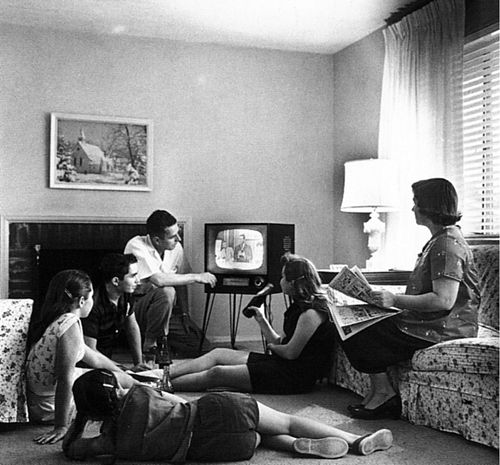
While so-called polarization and ideological divides (mass disinformation campaigns and the lack of grassroots citizen input at all levels) create a lot of noise in what passes for discourse in modern American media, everyone can agree on one thing: parents and the family are to blame for whatever ails our children.  Parents who just don't do a good job, families that are not two-parent, parents who won't turn off the TV, or parents who don't care:  there is a boatload of blame directed at the family.  Even among homeschoolers, the family blame game is popular.

But the fact is this:  families have been disenfranchised by the compulsory attendance in literacy factories for over a century now.  Families are greatly weakened by design in a system where compulsory attendance laws override the family.  Wage decline, the complete lack of family support services even sick leave, dysfunctional healthcare that often bankrupts families, childcare that costs ore than college tuition: all have a large negative impact on the family.  But when it comes to education, the family really can't be blamed for much since the entire system is designed to weaken the family.  Why is everyone complaining?
via Wikimedia
A Penny History
It didn't seem that way, of course, at first.  New schools themselves were a community resource, attendance was fairly short in length of time, and in the flow of growth that industrialization brought to the wealthy and still resource-rich US, this transition was still one that brought good things to many people's lives.  Deep structural issues, like the fact that families now had no input into their children's educational choices or studies and the hierarchical sorting and ranking to cull out the top, a Prussian method, were not fully felt when the bulk of jobs were unrelated to schooling. Maybe you were not the favorite in the one-room schoolhouse but until the 1920s, most jobs were in local businesses and communities and unrelated to school. After the depression, there were many, many new jobs being created by the industrial economy and the high scgool degree was a credential of real value.

Whatever families felt as compulsory attendance was lengthened, and lengthened (schools became addicted to legal power over families, it made a lot of things much simpler), it was also a free resource and there was great investment in it.  Schools were a workable way to go forward for vast numbers.  In the apartheid of the South this was not the case, and many Afruian-Americans would migrate to other areas. But the West was growing and the many new jobs within the school system itself were a boon in many parts of the country. Strong communities and jobs unrelated to schooling as well as vitamins in the food all helped compensate for dysfunctional methods that we still use.

The 1920s saw, for the first time, a majority of families no longer living on the farm, the social safety net of its day.  The car would keep the family moving, first into cities and then out again to suburbs.  Extended families became the nuclear families of post WWII which have become the single-parent families of today.

My point is this: the context, the nature of communities surrounding schools has completely changed. Families, jobs, neighborhoods, food and more, it has all changed. Schools fit into a specific context and schools must change to provide the support they once did in a different time.

The US does not have the strong social safety net of most industrialized countries to support children and families.  The past 40 years of wage decline have taken a steep toll on families as women began working to overcome economic shortfalls and children and communities suffered.    Family leave policies within the US are notoriously non-existent; career tracks are all-consuming. The corporation was born and is now wrecking havoc.  The family is completely powerless and has taken the hardest hit from these changes to our social structure.  But the blame game continues: families need to try harder so these mass institutions will work. Small institutions like the family and the family business and real small business are now so small, they are ignored. But as organic agriculture knows that care of the soil is a base, so care for the smallest social units is foundational to community, state and national health.

Compulsory attendance is an example of a design flaw, a mechanism that ignores the social reality of families and works against that instead of strengthening that and working with it.  In the 20th century, the brand new nation-state has been struggling to maintain itself against extreme inequality and broken political, economic and social systems.  There have been many failures and effective administration of the nation-state is critical to stability.  Extreme inequality is a warning sign that recent experience should flag immediately.  Developing social, political and economic institutions that are sustainable is a global imperative.

Learning is a natural human activity, literacy is not more important than democracy and sustainable relationships, it is simply a skill among many.  We can value the provision of learning services for families and children.  The building of school spaces and establishing of learning services is a good thing.  But the administration of these services should be democratic.  There is reason to believe that changing our compulsory model of schooling would open up new ways of strengthening our communities and the social relationships within them.    Homeschooling is a spontaneous grassroots movement by citizens to reclaim family life and learning from mass institutions.

It isn't the family that is to blame for school problems.  It is the schools that have damaged our families by not allowing families to be involved in any meaningful way, by dropping alternative paths instead of expanding them, by demanding homework and fess that eat into working-class time and money, by policies all designed to assume that families are static and parents are best ignored. Supporting a healthy educational and social life for families in a society of uneven wealth means schools need to be flexible and value far more than academic achievement.

parents not welcome

From the Daily Riff, an example of the way parents are treated by this public education system designed to exclude families from any real involvement:


A  Back-To-School Newsletter
Based Upon Real-Life Examples & Events

 Parents at Control Freak High are welcomed visitors and are encouraged to:

  • Visit and observe class
  • Join your child for lunch
  • Read to your child's class
  • Help with class projects and clean-up
  • Walk in a straight-line, single file

NOTE:  When observing, please do not disrupt or draw teacher or students away from their work.

NOTE:  All visits must be coordinated with teacher and school in advance to facilitate the best time to visit to avoid further disruptions.

--------------

All parents should check bulletin board each time they come to Control Freak High.  This will give you pertinent information you need for a successful child at Control Freak High and to maintain a level of parental involvement which helps every child succeed at Control Freak High.  You are also encouraged to bring brownies, write checks and bring in any empty egg cartons or magazines, or any materials that are only specified as needed by set guidelines of Control Freak High.

_________

We highly regard parents who participate in school appreciation day, class parties, parent-teacher conference meetings, parent helping days, Class Fair day, Class Whirlwind Day, School Halloween Carnival, School Holiday Fund-raiser, School Valentines' Fund Raising Day,
School Dress- Down-And-Up Day, School Booster Day, and the other 300 fund-raisers that make our school a success.

---------------

We also appreciate if parents were to understand that Control Freak High has a professional staff and a cooperative parent group that represents your child's interests so that we may best use our talents and time wisely, without further hardship on your time or concern, and recommend all communication be addressed through this wonderful school connection.

We value collaboration.

 Please note that interest in complex educational issues such as curriculum, pedagogy, and assessment are best left to the experts at the school.

We will be having another educator conference on this issue and will report any modifications affecting your children.

Please consult our next newsletter for new instructions.  We expect parents to follow these guidelines to insure the success of our students.


---------------

Control Freak High values parents who are involved and engaged as outlined on our "term guideline sheet".